
Awair
Awair Element
$299
Released 2019
Best Air Quality Monitors · head-to-head
A sourced, side-by-side comparison. Awair Element is cheaper at $299. Every spec and price links to its source.
Awair
$299
Released 2019
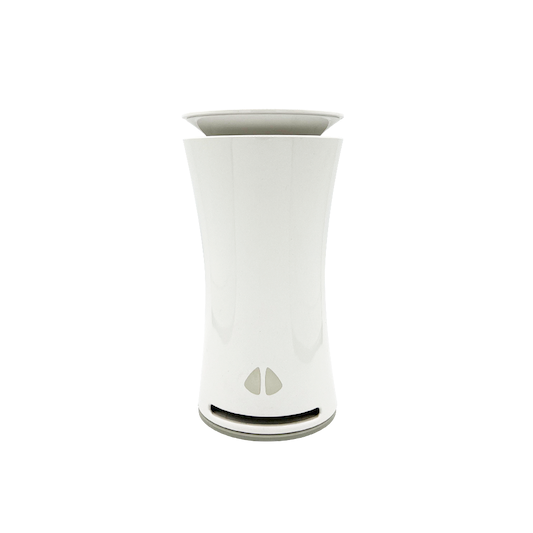
uHoo
$299
Released 2017
✓ marks the stronger figure where "more" — or "less", for price and weight — is unambiguously better.
| Spec | Awair Element | uHoo Smart Air Monitor |
|---|---|---|
| US price | $299 | $299 |
| Brand | Awair | uHoo |
| Released | 2019 | 2017 |
| Pm25 sensor | Yes | Yes |
| CO₂ sensor | Yes | Yes |
| Voc sensor | Yes | Yes |
| Radon sensor | No | No |
| Display screen | LED dot-matrix display (5-dot AQI score + numeric readout) | No screen - single RGB LED indicator |
| App connectivity | Yes | Yes |
| Power | AC plug-in (100-240 V, 5 V/2 A adapter) | 5 V/2 A USB plug-in (Micro-USB) |
| Release year | 2019 | 2017 |
Sources — Awair Element: getawair.com (verified 2026-06-20). uHoo Smart Air Monitor: getuhoo.com (verified 2026-06-20).
Where the two actually differ on the specs we track (2 of 7). Matching specs are omitted.
Sourced tester consensus for each — the "what people who used it think" layer, not just specs.
Two whitelisted hands-on testers cover the exact Awair Element: TechHive (2020) and Reviewed/USA Today (2024). Both recommend it as an accurate, user-friendly value pick with strong smart-home integration and helpful in-app tips. Both flag the weak on-device readout; Reviewed additionally notes it needs constant power (no battery) and lacks radon detection. Neither published measured accuracy numbers, so 'accurate' rests on qualitative comparison to reference instruments only. All six draft quotes verified as literal substrings; both sources survived intact. (2 sourced reviews, 2 lab-tested.)
Praised: Accurate real-time readings; temperature and humidity matched a reference thermometer and hygrometer; Comprehensive, user-friendly companion app delivering deeper insights and readings; Integrates with multiple smart-home platforms (Alexa, Google Home, etc.).
Flagged: Poor on-device readout — white-on-white LEDs hard to read / no real screen display; Requires constant USB power, no battery option; No radon detection, unlike pricier alternatives.
Only one whitelisted tester, TechHive, published a hands-on uHoo Smart Air Monitor review; no PCMag, Tom's Guide, or Wirecutter coverage exists, and non-whitelist sources (Consumer Reports, Modern Castle, Gearbrain) were excluded. TechHive rates the nine-pollutant sensor among the best it has tested but faults a dated app, broken smart-home support, and a $399 price it calls overpriced. (1 sourced review, 1 lab-tested.)
Praised: Accurate, sensitive sensor suite that adds ozone and NO2, rare among rivals; Temperature and humidity readings matched the tester's reference weather sensors; Actionable, plain-English notifications on how to improve air quality.
Flagged: Dated, uninspired, not-user-friendly app; Broken smart-home support (advertised Alexa skill missing); Overpriced at $399.