
Wahoo
Wahoo Elemnt Bolt V2
$279.99Cheaper
Released 2021-05
Best Bike Computers · head-to-head
A sourced, side-by-side comparison. Wahoo Elemnt Bolt V2 is cheaper at $279.99. Every spec and price links to its source.
Wahoo
$279.99Cheaper
Released 2021-05
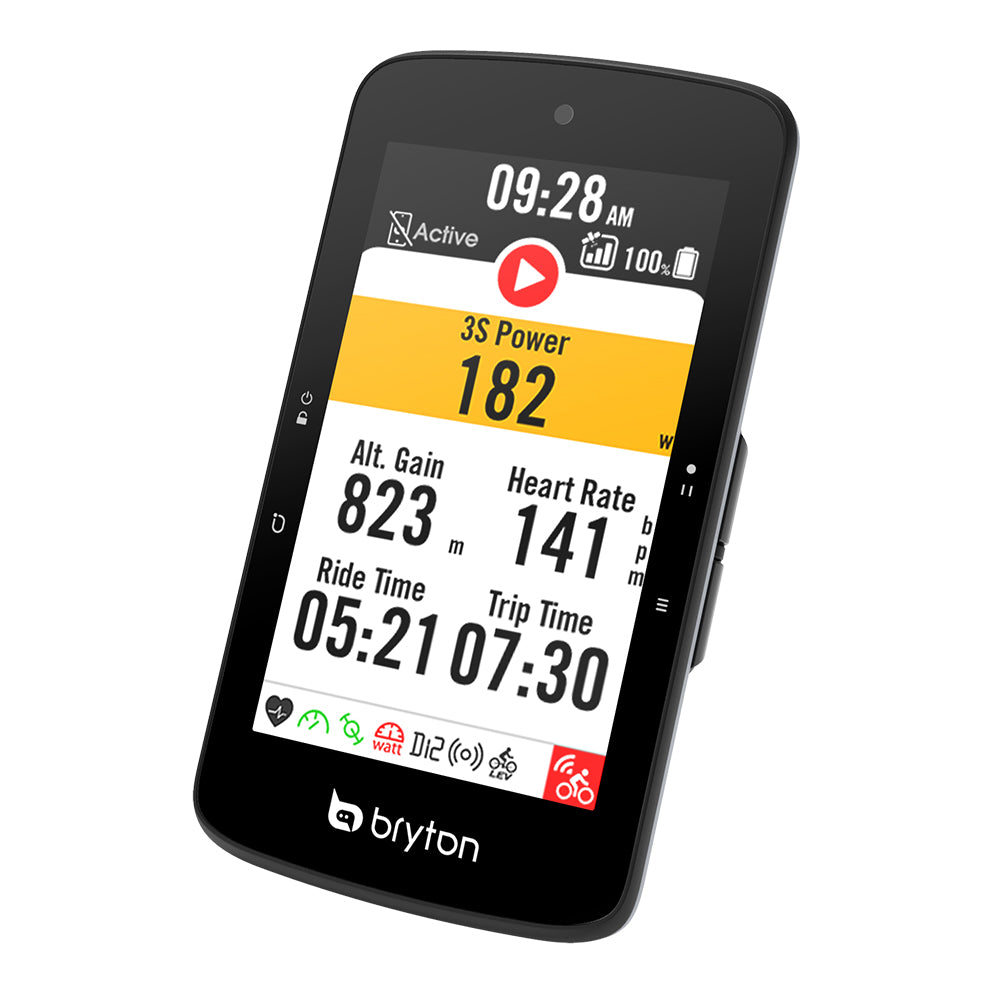
Bryton
$399.95
Released 2022
The Wahoo Elemnt Bolt V2 wins 1 of the 1 specs we compare head to head; the other wins 0. The Wahoo Elemnt Bolt V2 is the cheaper at $279.99. The Wahoo Elemnt Bolt V2 both leads on specs and costs less — the straightforward pick.
As an Amazon Associate we earn from qualifying purchases. Prices verified at capture; live price may differ.
✓ marks the stronger figure where "more" — or "less", for price and weight — is unambiguously better.
| Spec | Wahoo Elemnt Bolt V2 | Bryton Rider S800 |
|---|---|---|
| US price | $279.99 | $399.95 |
| Brand | Wahoo | Bryton |
| Released | 2021-05 | 2022 |
| Display size (in) | 2.2 in | 3.4 in |
| Touchscreen | No | Yes |
| Battery life hours | 15 | 36 |
| Preloaded maps | Yes | Yes |
| Multiband gnss | No | No |
| Connectivity | ANT+, Bluetooth, Wi-Fi | ANT+, Bluetooth, Wi-Fi |
| Weight (g) | 70 | 106 |
| Release | 2021-05 | 2022 |
Sources — Wahoo Elemnt Bolt V2: support.wahoofitness.com (verified 2026-06-19). Bryton Rider S800: global.brytonsport.com (verified 2026-06-19).
Where the two actually differ on the specs we track (4 of 7). Matching specs are omitted.
Sourced tester consensus for each — the "what people who used it think" layer, not just specs.
Two whitelisted testers cover the V2. Cycling Weekly's year-later long-term test (Sept 2022) calls it user-friendly and accurate, nailing everything but navigation refinement. DC Rainmaker's launch-window review-in-progress (May 2021) hit severe firmware bugs: crashes, sensor dropouts, and delayed turn cues. The verdict splits sharply on reliability, and that split tracks the test date. (2 sourced reviews, 2 lab-tested.)
Praised: 64-colour screen used tastefully; its coloring bests the pricier Roam; 16GB onboard storage with full routable maps preloaded; Simple setup and intuitive, user-friendly operation.
Flagged: Navigation not fully refined; can reroute onto gravel and on-screen position lags at speed; Early-firmware instability: crashes, sensor dropouts, delayed turn cues; 15-hour battery shorter than the Roam and rival units.
Only one whitelisted tester (Cycling Weekly) published a hands-on review of this exact model; DC Rainmaker, TechRadar and Digital Trends had none. It praises excellent hardware — a bright 3.4in touchscreen, roughly week-long battery, and rich climb/interval data (Climb Challenge) — but pans the Bryton Active app as the worst mobile app the reviewer has ever seen, plus one unexplained mid-ride freeze that lost two hours of data. (1 sourced review.)
Praised: Big, bright, responsive 3.4in colour touchscreen; Long battery life; needs charging only about once a week; Rich features and data options for climbing and intervals (Climb Challenge).
Flagged: Bryton Active app is poorly laid out, unattractive and hard to navigate; Slow, unreliable data sync between app and head unit (reviewer resorted to a laptop); One unexplained mid-ride freeze lost two hours of training data.