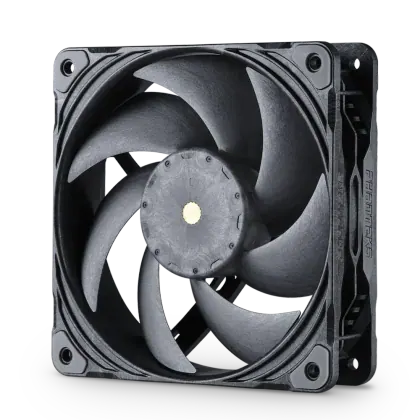
Phanteks
Phanteks T30-120
$39.99
Best Case Fans · head-to-head
A sourced, side-by-side comparison. Lian Li UNI FAN TL 140 is cheaper at $36. Every spec and price links to its source.
Phanteks
$39.99
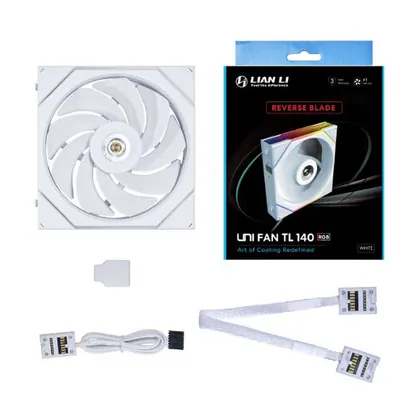
Lian Li
$36Cheaper
The Lian Li UNI FAN TL 140 wins 1 of the 1 specs we compare head to head; the other wins 0. The Lian Li UNI FAN TL 140 is the cheaper at $36. The Lian Li UNI FAN TL 140 both leads on specs and costs less — the straightforward pick.
As an Amazon Associate we earn from qualifying purchases. Prices verified at capture; live price may differ.
The numbers that decide it, drawn to scale — longer bar wins, the accent bar is the stronger figure.
✓ marks the stronger figure where "more" — or "less", for price and weight — is unambiguously better.
| Spec |  Phanteks T30-120 Phanteks T30-120 |  Lian Li UNI FAN TL 140 Lian Li UNI FAN TL 140 |
|---|---|---|
| US price | $39.99 | $36 |
| Brand | Phanteks | Lian Li |
| Released | — | — |
| Fan size (mm) | 120 | 140 |
| Thickness (mm) | 30 | 28 |
| Max airflow (CFM) | 100.9 | 103.9 |
| Max static pressure mm h2 o | 7.37 | 2.34 |
| Max speed (rpm) | 3000 | 1800 |
| Min speed (rpm) | 0 | 200 |
| Max noise (dBA) | 39.7 | 29 |
| Bearing type | magnetic-levitation | fluid-dynamic |
| Connector type | 4-pin-pwm | proprietary |
| Lighting | none | argb |
| Mtbf hours | — | — |
| Weight grams | 230 | — |
Sources — Phanteks T30-120: phanteks.com (verified 2026-07-11). Lian Li UNI FAN TL 140: lian-li.com (verified 2026-07-11).
Where the two actually differ on the specs we track (10 of 12). Matching specs are omitted.
Sourced tester consensus for each — the "what people who used it think" layer, not just specs.
Only one whitelisted hands-on source survived verification: Tom's Hardware (Aug 2021), which found the T30-120 to be the first fan to beat Noctua's NF-A12x25 on noise-normalized airflow, aided by its 30mm thickness. It praises the switchable operating modes, build/construction quality, and daisy-chaining, while cautioning that the extra thickness can hurt case/radiator fit. The TechPowerUp entry was dropped because its page showed only the review's introduction; none of its cited quotes or measured test values (which live on later pages of the paginated review) could be confirmed in the retrieved text. (1 sourced review, 1 lab-tested.)
Praised: Dethrones the Noctua NF-A12x25 with best-in-class noise-normalized airflow performance; Flexible tuning via switchable operating modes / rear speed switch; Very good build and construction quality.
Flagged: 30mm thickness lowers case/radiator compatibility — verify fit before buying; No RGB at the ~$30 price; a separate Phanteks Halo ring is needed for lighting.
Only one whitelisted tester covered it: Tom's Hardware's hands-on of the UNI FAN TL line, mostly the LCD variant, with no cooling or noise testing. It praises daisy-chain wiring that cuts cable clutter but flags six-pin PCIe power and being unable to mix LCD and non-LCD fans in one chain. Exact TL 140 lab tests fall outside the whitelist. (1 sourced review.)
Praised: Daisy-chain Uni Fan cabling drastically reduces the number of wires to route and hide when installing several fans.
Flagged: Controller box requires a six-pin PCIe power connector (plus SATA for stability), hard to spare in GPU-heavy builds; LCD and non-LCD TL fans cannot be mixed on the same daisy-chain to the controller box.