Segway
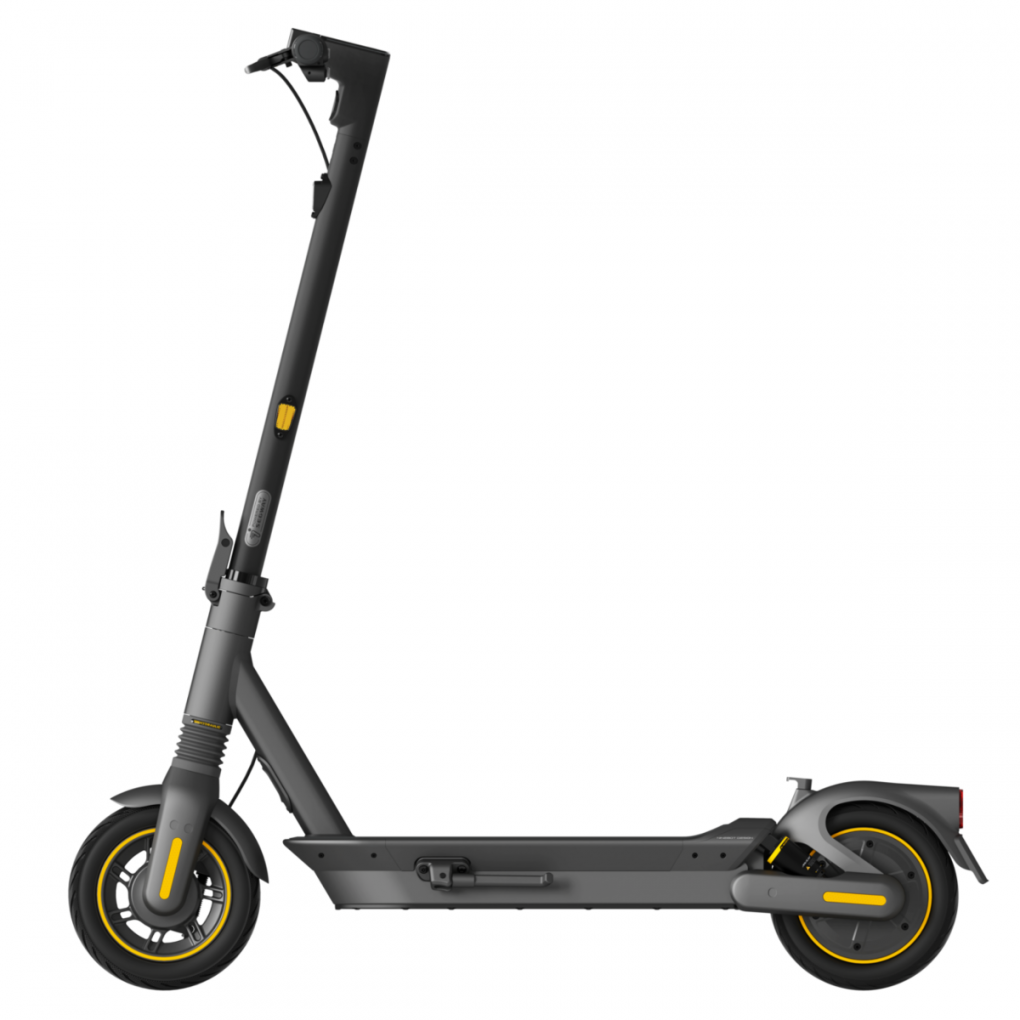
Segway Ninebot KickScooter Max G2
$700Cheaper
Released 2023
Best Electric Scooters · head-to-head
A sourced, side-by-side comparison. Segway Ninebot KickScooter Max G2 is cheaper at $700. Every spec and price links to its source.
Segway
$700Cheaper
Released 2023

NIU
$799
Released 2022
The NIU KQi3 Pro wins 1 of the 1 specs we compare head to head; the other wins 0. The Segway Ninebot KickScooter Max G2 is the cheaper at $700. Get the NIU KQi3 Pro for the stronger spec sheet, the Segway Ninebot KickScooter Max G2 to spend less.
As an Amazon Associate we earn from qualifying purchases. Prices verified at capture; live price may differ.
✓ marks the stronger figure where "more" — or "less", for price and weight — is unambiguously better.
| Spec | Segway Ninebot KickScooter Max G2 | NIU KQi3 Pro |
|---|---|---|
| US price | $700 | $799 US MSRP per riderguide.com |
| Brand | Segway | NIU |
| Released | 2023 | 2022 |
| Top speed mph | 22 | 20 |
| Range mi | 43 | 31 |
| Motor (W) | 450 | 350 |
| Max load (lb) | 265 | 265 |
| Weight (lb) | 53.5 | 45 |
| Tire type | tubeless | pneumatic tubeless |
| Suspension | front hydraulic, rear spring | none |
| Release | 2023 | 2022 |
Sources — Segway Ninebot KickScooter Max G2: riderguide.com (verified 2026-06-15). NIU KQi3 Pro: riderguide.com (verified 2026-09-21).
Where the two actually differ on the specs we track (6 of 7). Matching specs are omitted.
Sourced tester consensus for each — the "what people who used it think" layer, not just specs.
Both whitelisted outlets that hands-on tested this exact model — Tom's Guide and Notebookcheck — recommend it (Tom's Guide gave it an Editor's Choice; Notebookcheck recommends it 'without reservation'). Both praise the suspension, the comfortable long-range ride, and the turn-signal lighting, while flagging the heavy ~24 kg / 53 lb weight. Notebookcheck additionally panned the confusing, sluggish app and barebones display. (2 sourced reviews, 2 lab-tested.)
Praised: Suspension delivers a smooth, comfortable ride and strong handling; Large battery gives strong real-world range; Turn signals and overall lighting setup are standout features.
Flagged: Very heavy and bulky, awkward to carry up stairs or onto trains; Confusing, sluggish app plus a barebones on-board display with no odometer; One Tom's Guide review unit lost power mid-ride and threw an error before being replaced.
Only one whitelisted tester, TechRadar, published a hands-on review of this exact model (NIU KQi3 Pro, first reviewed November 2022). It earned Editor's Choice with a 5/5 total, praising shock-absorbing 30%-fatter 9.5-inch pneumatic tires, snappy performance with a 20% hill-climb rating (held 7-9 mph on a steep grade), unusually easy assembly, and strong $799 value, while flagging that it's heavy and not portable (44.75 lb), only IP54 water-resistant, and has very responsive brakes. (1 sourced review, 1 lab-tested.)
Praised: Excellent shock absorption from 30%-fatter 9.5-inch pneumatic tires; smooth even on pothole-laden roads; Powerful, snappy performance with 20% hill-climb rating (held 7-9 mph on a steep grade); Strong value at $799 with a rich feature set (anti-theft alarm, always-on Halo headlight, cruise control).
Flagged: Heavy and not portable/lightweight — among the biggest, heaviest commuter e-scooters they've tested (44.75 lb); Only IP54 water resistance, so not suitable for downpours or flooding; Brakes are very responsive; reviewer warns of being thrown off if braking too hard at 20 mph.