
Asus
Asus ROG Ally (Z1 Extreme)
$699
Released 2023-06
Best Handheld Gaming Pcs · head-to-head
A sourced, side-by-side comparison. Asus ROG Ally (Z1 Extreme) is cheaper at $699. Every spec and price links to its source.
Asus
$699
Released 2023-06
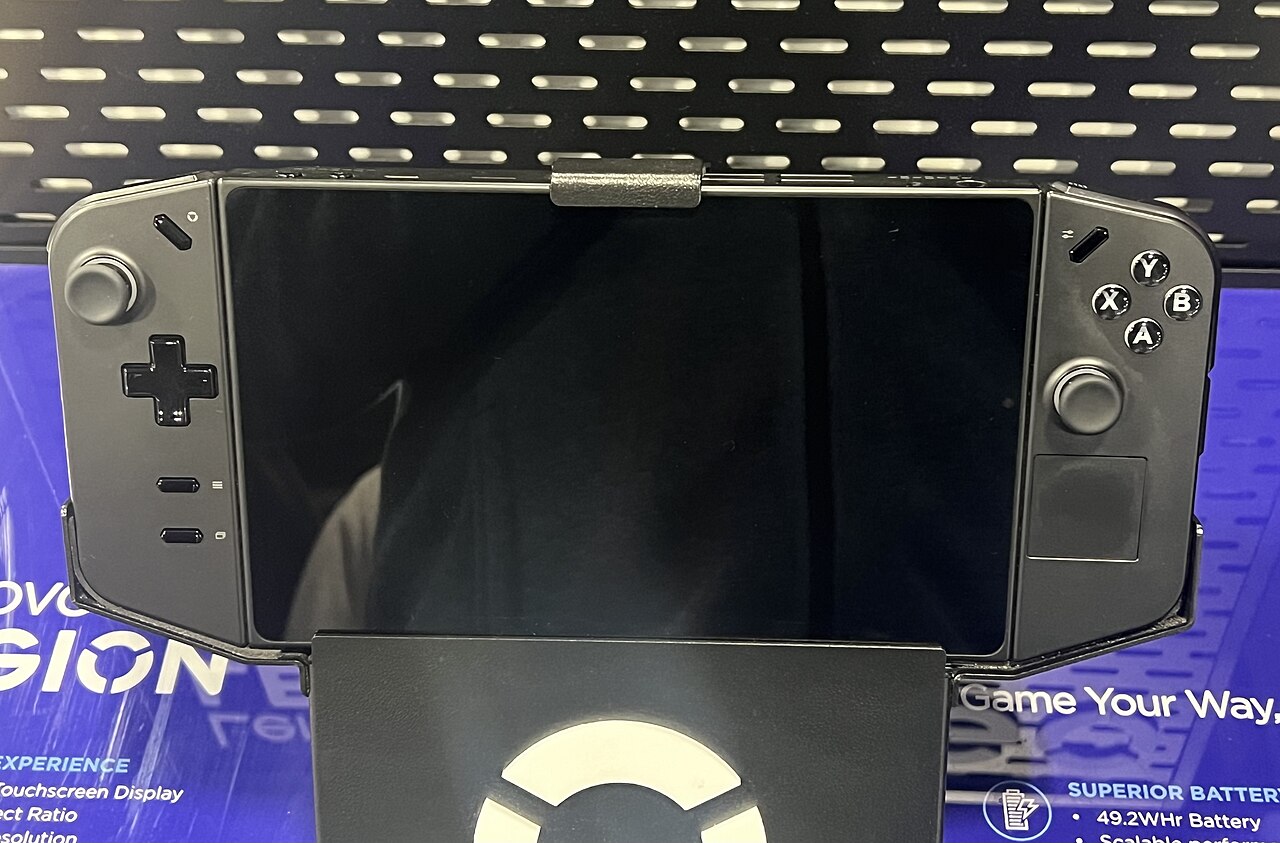
Lenovo
$699
Released 2023-10
The Lenovo Legion Go wins 2 of the 3 specs we compare head to head; the other wins 1.
As an Amazon Associate we earn from qualifying purchases. Prices verified at capture; live price may differ.
The numbers that decide it, drawn to scale — longer bar wins, the accent bar is the stronger figure.
✓ marks the stronger figure where "more" — or "less", for price and weight — is unambiguously better.
| Spec | Asus ROG Ally (Z1 Extreme) | Lenovo Legion Go |
|---|---|---|
| US price | $699 Launch MSRP, 512GB config | $699 |
| Brand | Asus | Lenovo |
| Released | 2023-06 | 2023-10 |
| Chip | AMD Ryzen Z1 Extreme (Zen 4, 8c/16t, RDNA 3 12CU) | AMD Ryzen Z1 Extreme (Zen 4, 8c/16t, RDNA 3 12CU) |
| Screen (in) | 7.0 in | 8.8 in |
| Screen resolution | 1920x1080 | 2560x1600 |
| Refresh (Hz) | 120 | 144 |
| Battery (Wh) | 40 | 49.2 |
| RAM (GB) | 16 | 16 |
| Weight (g) | 608 | 854 |
| OS | Windows 11 Home | Windows 11 Home |
| Release | 2023-06 | 2023-10 |
Sources — Asus ROG Ally (Z1 Extreme): rog.asus.com (verified 2026-06-15). Lenovo Legion Go: en.wikipedia.org (verified 2026-06-15).
Where the two actually differ on the specs we track (5 of 8). Matching specs are omitted.
Sourced tester consensus for each — the "what people who used it think" layer, not just specs.
Two whitelisted lab testers (Tom's Hardware, Notebookcheck) reviewed the exact Ryzen Z1 Extreme model. Both praise its bright 120Hz 1080p IPS screen (measured ~465-474 nits) and the powerful AMD Zen4 Ryzen Z1 Extreme, and both note the handheld is more compact and lighter than the Steam Deck. Both flag short battery life during gaming — roughly one hour in Turbo and ~1.5-1.75 hours in Performance mode. (2 sourced reviews, 2 lab-tested.)
Praised: Bright, sharp 120Hz 1080p IPS screen (measured ~465-474 nits) clearly beats the Steam Deck; Powerful AMD Zen4 Ryzen Z1 Extreme delivers smooth 720p/1080p frame rates for a handheld; More compact and lighter than the Steam Deck.
Flagged: Short battery life while gaming (~1 hour in Turbo, ~1.5-1.75 hours in Performance mode); Performance differs notably on battery vs plugged in (Turbo) — Tom's Hardware only; No webcam and no built-in kickstand — Notebookcheck only.
Three whitelisted testers (Tom's Hardware, Tom's Guide, TechRadar) hands-on-reviewed the original Z1 Extreme Legion Go in late 2023. All praise its big, bright 8.8-inch 144Hz display and versatile detachable controllers, but flag weak battery life. It uses an IPS panel, not OLED like the rival Steam Deck OLED. (3 sourced reviews, 3 lab-tested.)
Praised: Large, bright 8.8-inch 144Hz display with vivid, well-saturated colors (~476 nits measured); Versatile design: detachable controllers, sturdy full-length kickstand, dual USB-C ports; Capable Z1 Extreme performance for AAA and esports titles once settings are tuned.
Flagged: Poor battery life — roughly a few hours per charge, under 2 hours while gaming; Native 2560x1600 resolution is impractical for games; usable lower resolutions look muddy on the big screen; Clumsy to navigate Windows 11 with the controllers.