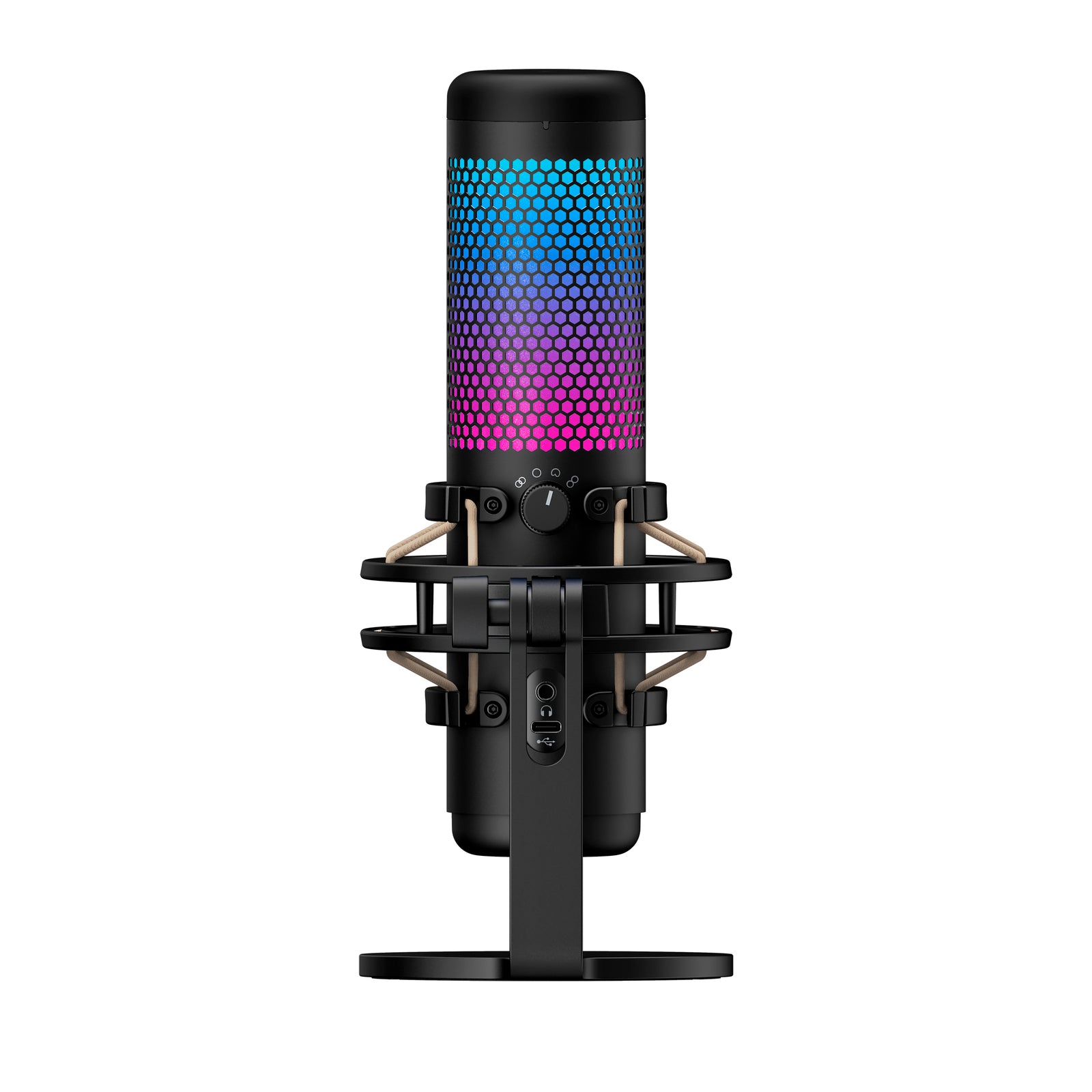
HyperX
HyperX QuadCast S
$199.99
Released 2020
Best Microphones · head-to-head
A sourced, side-by-side comparison. Audio-Technica AT2020USB-X is cheaper at $169. Every spec and price links to its source.
HyperX
$199.99
Released 2020

Audio-Technica
$169Cheaper
Released 2022
The Audio-Technica AT2020USB-X wins 1 of the 1 specs we compare head to head; the other wins 0. The Audio-Technica AT2020USB-X is the cheaper at $169. The Audio-Technica AT2020USB-X both leads on specs and costs less — the straightforward pick.
As an Amazon Associate we earn from qualifying purchases. Prices verified at capture; live price may differ.
The numbers that decide it, drawn to scale — longer bar wins, the accent bar is the stronger figure.
✓ marks the stronger figure where "more" — or "less", for price and weight — is unambiguously better.
| Spec | HyperX QuadCast S | Audio-Technica AT2020USB-X |
|---|---|---|
| US price | $199.99 | $169 |
| Brand | HyperX | Audio-Technica |
| Released | 2020 | 2022 |
| Connectivity | USB | USB-C |
| Polar pattern | cardioid, bidirectional, omnidirectional, stereo | cardioid |
| Type | condenser | condenser |
| Sample rate (kHz) | 48 | 96 |
| Bit depth | 16 | 24 |
| Headphone jack | Yes | Yes |
| Mute button | Yes | Yes |
| Mount | integrated vibration-isolating shock mount; standard 3/8" thread adapter included | included desktop stand; 5/8"-27 thread adapter included |
| Release | 2020 | 2022 |
Sources — HyperX QuadCast S: hyperx.com (verified 2026-06-15). Audio-Technica AT2020USB-X: newegg.com (verified 2026-06-15).
Where the two actually differ on the specs we track (5 of 8). Matching specs are omitted.
Sourced tester consensus for each — the "what people who used it think" layer, not just specs.
Three hands-on reviews - SoundGuys, Tom's Hardware, and Tom's Guide - rate the QuadCast S a clear-sounding, superbly built USB streamer mic with four polar patterns, a built-in shock mount, and standout RGB lighting. All three note it is a near-identical, pricier RGB reskin of the original QuadCast. Only SoundGuys published any lab measurement (a described frequency-response dip near 1 kHz); no source published self-noise or SNR figures. (3 sourced reviews, 1 lab-tested.)
Praised: Clear, professional-sounding audio quality; Solid all-metal build with useful built-in shock mount and touch-to-mute; Four polar patterns (cardioid, bidirectional, omni, stereo) add flexibility.
Flagged: Near-identical to the cheaper original QuadCast; little reason to upgrade; RGB can only be disabled via NGenuity software (Windows/PC-only); Premium price (~$159), roughly $30 more than the Blue Yeti.
Two whitelisted hands-on reviewers (SoundGuys, TechRadar) covered this exact model; neither published measured numbers. Both praise its clear voice/sound quality, sturdy all-metal build, and silent touch-mute controls, and both fault the missing gain control plus high sensitivity that picks up room noise. Verdict: excellent for treated, quiet spaces, weak in noisy rooms. (2 sourced reviews.)
Praised: Clear, professional voice/sound quality; Sturdy all-metal build quality; Silent touch-sensitive mute with LED indicator and easy controls.
Flagged: No gain control; high sensitivity picks up ambient/room noise, poor in untreated spaces; Only a single cardioid pickup pattern (no pattern switching); No onboard noise reduction.