Shure
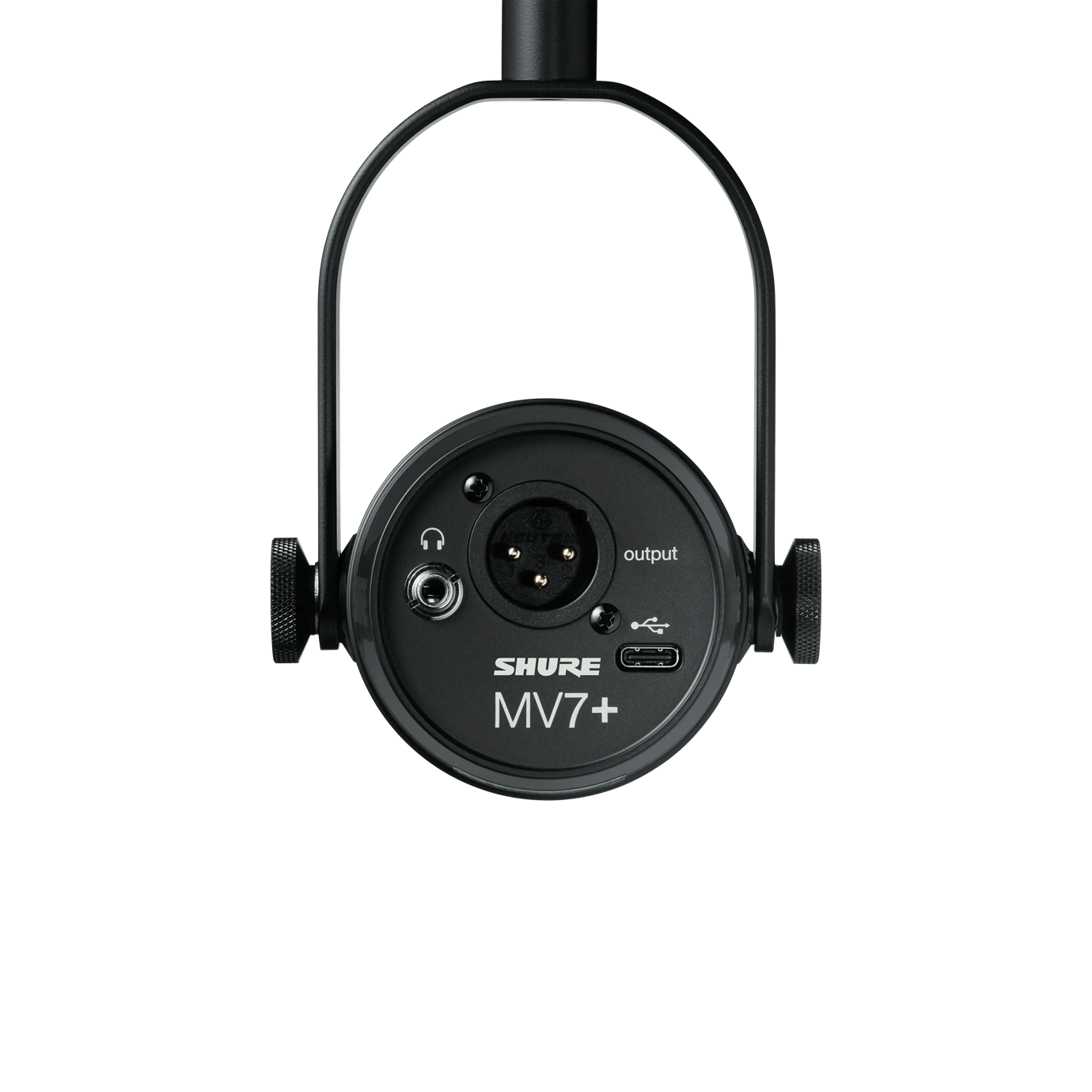
Shure MV7+
—
Released 2022
Best Microphones · head-to-head
A sourced, side-by-side comparison. Rode NT-USB+ is cheaper at $157. Every spec and price links to its source.
Shure
—
Released 2022

Rode
$157
Released 2022
✓ marks the stronger figure where "more" — or "less", for price and weight — is unambiguously better.
| Spec | Shure MV7+ | Rode NT-USB+ |
|---|---|---|
| US price | — | $157 |
| Brand | Shure | Rode |
| Released | 2022 | 2022 |
| Connectivity | USB-C + XLR | USB-C |
| Polar pattern | cardioid | cardioid |
| Type | dynamic | condenser |
| Sample rate (kHz) | — | — |
| Bit depth | — | — |
| Headphone jack | Yes | Yes |
| Mute button | Yes | — |
| Mount | 5/8" thread (arm-ready); desk stand not included | included desktop tripod stand |
| Release | 2022 | 2022 |
Sources — Shure MV7+: shure.com (verified 2026-06-15). Rode NT-USB+: rode.com (verified 2026-06-15).
Where the two actually differ on the specs we track (3 of 8). Matching specs are omitted.
Sourced tester consensus for each — the "what people who used it think" layer, not just specs.
Two whitelisted hands-on reviewers (SoundGuys, Tom's Guide) both recommend the Shure MV7+ for podcasters and streamers, praising warm vocal reproduction, an effective denoiser and easy USB-C/XLR setup. Tom's Guide flags the $279 price versus rivals; SoundGuys dislikes accidental mutes. Neither published lab measurements, so both are qualitative. (2 sourced reviews.)
Praised: Warm, detailed vocal reproduction; Strong at minimizing plosives and ambient noise; Dual USB-C and XLR connectivity, usable simultaneously.
Flagged: Expensive at $279 versus rivals; Digital pop filter not fully effective; audible plosives; Touch-panel mute triggered by accident when repositioning.
Only one whitelisted tester, Tom's Hardware, published a genuine hands-on review of the exact NT-USB+; it names the mic an Editor's Choice for rich, low-noise vocals and a sturdy build, but flags no on-mic gain control and clipping on louder sources. No lab-measured numbers were reported. (1 sourced review, 1 lab-tested.)
Praised: Rich, detailed vocals with very little self-noise; Sturdy, well-built metal body with included detachable pop filter; USB-C plus zero-latency headphone monitoring; one of the better-sounding USB mics tested.
Flagged: No on-mic gain control or mute; Still clips on louder audio sources; Studio-quality but not high-res (24-bit/48kHz).