M-Audio
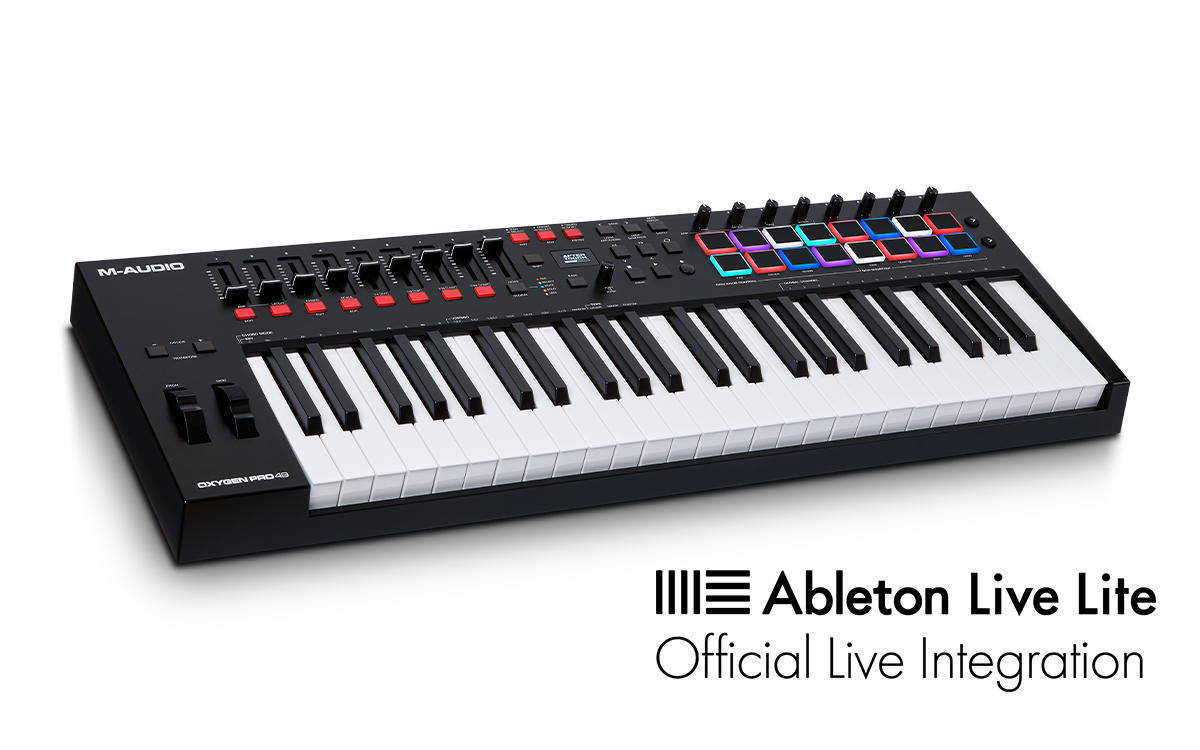
M-Audio Oxygen Pro 49
$299
Released 2021
Best MIDI Keyboards · head-to-head
A sourced, side-by-side comparison. Korg nanoKEY2 is cheaper at $99.99. Every spec and price links to its source.
M-Audio
$299
Released 2021

Korg
$99.99Cheaper
Released 2011
On the specs we track, they're closely matched. The Korg nanoKEY2 is the cheaper at $99.99.
As an Amazon Associate we earn from qualifying purchases. Prices verified at capture; live price may differ.
✓ marks the stronger figure where "more" — or "less", for price and weight — is unambiguously better.
| Spec | M-Audio Oxygen Pro 49 | Korg nanoKEY2 |
|---|---|---|
| US price | $299 MSRP / street price | $99.99 |
| Brand | M-Audio | Korg |
| Released | 2021 | 2011 |
| Keys | 49 | 25 |
| Key type | semi_weighted | synth |
| Drum pads | 16 | 0 |
| Knobs | 8 | 0 |
| Faders | 9 | 0 |
| Aftertouch | Yes | No |
| Connection | usb_midi_din | usb |
| Bundled software | Ableton Live Lite, Pro Tools First, MPC Beats, AIR Hybrid 3, Mini Grand, Velvet, TubeSynth | Korg Kontrol Editor |
| Release | 2021 | 2011 |
Sources — M-Audio Oxygen Pro 49: m-audio.com (verified 2026-06-19). Korg nanoKEY2: korg.com (verified 2026-06-19).
Where the two actually differ on the specs we track (8 of 8). Matching specs are omitted.
Sourced tester consensus for each — the "what people who used it think" layer, not just specs.
Two hands-on reviews of the Oxygen Pro 49 survive verification: Sound on Sound (May 2021) and MusicRadar (27 May 2021). Both recommend it as a feature-rich, competitively priced controller, and both flag the light, springy keybed and the time needed to learn the feature set. Neither outlet published lab measurements. Note that MusicRadar's build-quality passage is a verbatim reprint of Sound on Sound's text under its 'The web says' heading, so chassis assessment rests on one independent source, not two. No claim is made here about coverage by outlets that were not fetched. (2 sourced reviews, 2 lab-tested.)
Praised: Backlit pads are a highlight — responsive to varied playing pressure and triggering reliably across their surface; Smart Chord, Smart Scale and the arpeggiator add real performance value, including for non-keyboardists; Generous bundled software suite for the asking price.
Flagged: Keybed is light and springy — Sound on Sound also calls it noisy, with plasticky clatter at the bottom of the stroke; Steep learning curve, with many features buried behind the Shift button and menu-diving; Documentation for many features and software tie-ins is sparse.
One verified review of this exact model survives: MusicRadar (by Computer Music), 1 June 2011. It rates the nanoKey2 a clear improvement on the original nanoKey — velocity response is now consistent regardless of where you strike the key, the keys no longer catch on the casing, and the overall feel is much better — while noting the action stays very light and a little awkward, and that the original's CC Mode was removed. The verdict is 'The new hardware looks and feels better, though some may be disappointed that certain features have been left behind.' All judgements are subjective; no measurements are published. (1 sourced review.)
Praised: Velocity response is far more consistent than the original nanoKey, and keys no longer stick against the edge of the casing; Improved design and build with notably better key feel, at a highly affordable price (listed at £48 / $65); Class-compliant USB-powered operation across the nanoSeries 2 — no drivers or external power supply needed.
Flagged: The original nanoKey's CC Mode was removed, so functionality was lost from the first series rather than the feature-set being expanded; Very light, non-traditional key action still feels a little awkward and takes getting used to; Deeper settings such as velocity curve and pitch/mod button timing still require the separate Kontrol Editor software.