Toyota
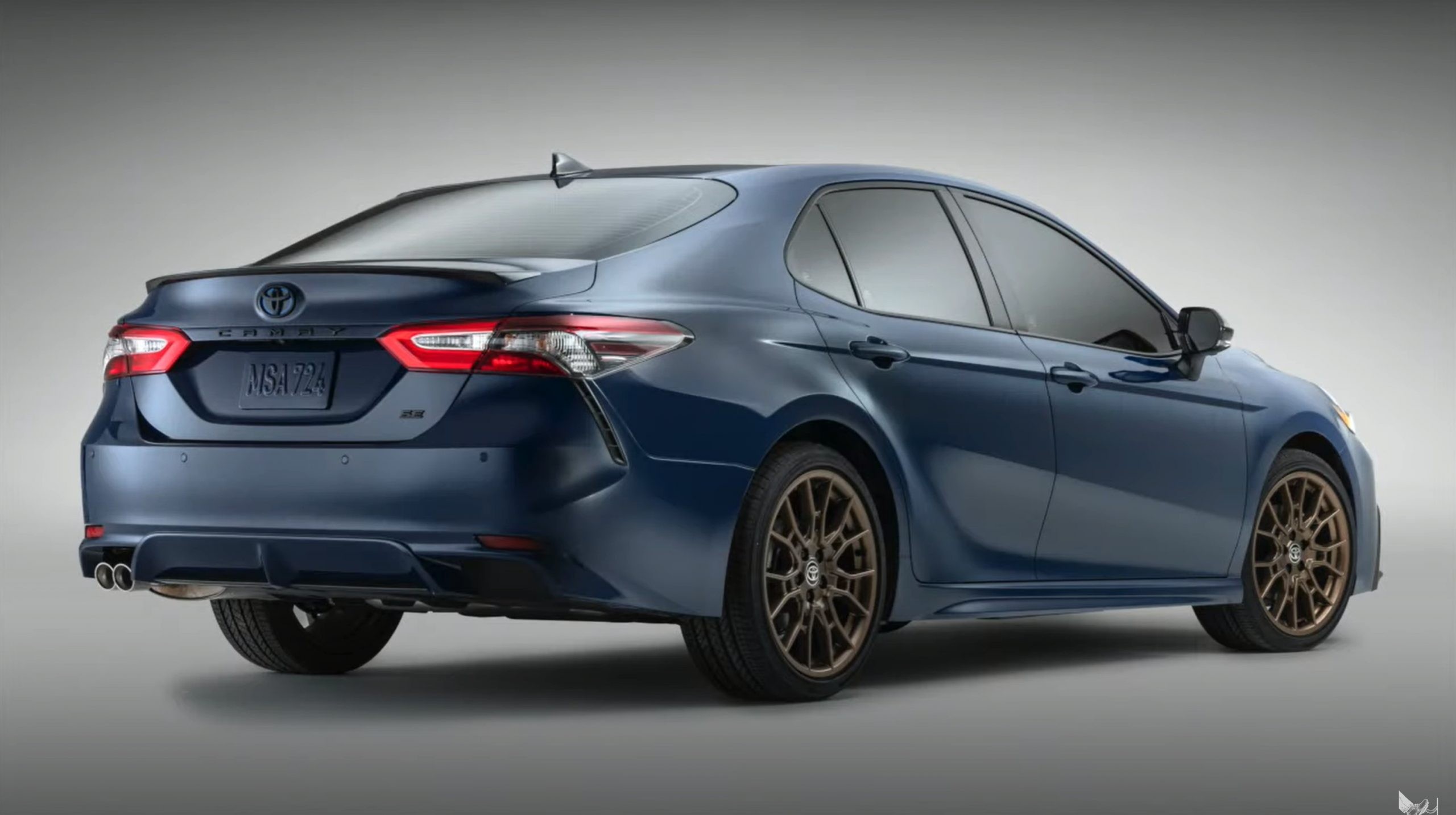
Toyota Camry (2026)
$29100Cheaper
Released 2026
Best Cars · head-to-head
A sourced, side-by-side comparison. Toyota Camry (2026) is cheaper at $29100. Every spec and price links to its source.
Toyota
$29100Cheaper
Released 2026

Hyundai
$29700
Released 2026
On the specs we track, they're closely matched. The Toyota Camry (2026) is the cheaper at $29100.
As an Amazon Associate we earn from qualifying purchases. Prices verified at capture; live price may differ.
✓ marks the stronger figure where "more" — or "less", for price and weight — is unambiguously better.
| Spec | Toyota Camry (2026) | Hyundai Tucson (2026) |
|---|---|---|
| US price | $29100 | $29700 |
| Brand | Toyota | Hyundai |
| Released | 2026 | 2026 |
| Body style | midsize sedan | compact SUV |
| Mpg combined | 51 | 28 |
| Horsepower | 225 | 187 |
| Drivetrain | FWD | FWD |
| Seats | 5 | 5 |
| Cargo cuft | 15.1 | — |
| Powertrain | 2.5L inline-4 hybrid (HEV), automatic AV-S6 | 2.5L inline-4 naturally aspirated, 8-speed automatic |
| Release | 2026 | 2026 |
Sources — Toyota Camry (2026): fueleconomy.gov (verified 2026-06-15). Hyundai Tucson (2026): fueleconomy.gov (verified 2026-06-15).
Where the two actually differ on the specs we track (4 of 7). Matching specs are omitted.
Sourced tester consensus for each — the "what people who used it think" layer, not just specs.
Two whitelisted testers, Car and Driver and MotorTrend, rate the 2026 Camry among the best midsize sedans for its efficient standard-hybrid powertrain, roomy cabin, and easy-to-use tech. Only Car and Driver instrumented-tested it (7.0-sec 0-60 for the Nightshade FWD, 34 mpg observed, 171-ft braking, 0.87 g skidpad). MotorTrend did not publish its own numbers but flags interior build quality with squeaks and rattles. The two split most clearly on steering. (2 sourced reviews, 1 lab-tested.)
Praised: Efficient standard-hybrid powertrain with strong real-world fuel economy; Roomy, comfortable interior with modern, easy-to-use tech; Quick, responsive hybrid acceleration for a midsize sedan.
Flagged: Vague steering that lacks feel; limited driving athleticism; Interior build quality: squeaks and rattles noted in testing; Priced above its staunchest rivals.
Two whitelisted testers—Car and Driver (8/10) and MotorTrend (8.8/10)—rate the 2026 Tucson a roomy, refined, well-equipped compact SUV undercut by a poky, unrefined base gas engine. Their hard numbers are same-generation carryover (2022/2025 test cars), not fresh 2026 units, and both are transparent that the 2.5L powertrain is unchanged for 2026. (2 sourced reviews, 2 lab-tested.)
Praised: Roomy, practical cabin with generous passenger and cargo space; Modern, tech-forward dual-screen interior; wireless CarPlay/Android Auto standard; Strong value for the money (MotorTrend Value 9.0/10: blend of style, technology and value).
Flagged: Base 2.5L gas engine is poky, underpowered and unrefined; Less engaging to drive than class rivals (Honda/Mazda/VW); Mediocre measured fuel economy — C/D's XRT managed 26 mpg on its 75-mph highway route.