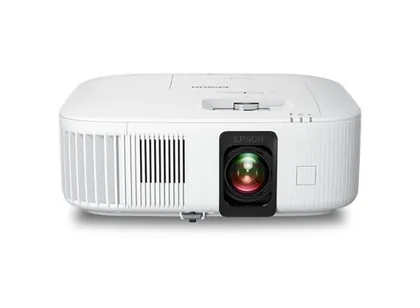
Epson
Epson Home Cinema 2350
$1399
Released 2022-09
Best Projectors · head-to-head
A sourced, side-by-side comparison. Anker Nebula Capsule 3 is cheaper at $529. Every spec and price links to its source.
Epson
$1399
Released 2022-09
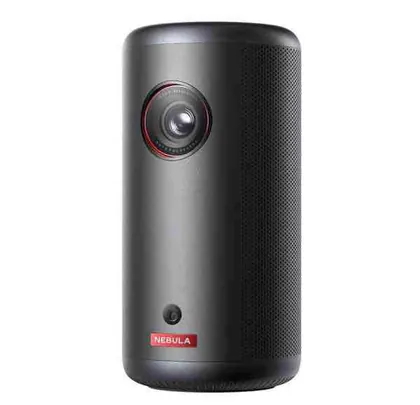
Anker
$529Cheaper
Released 2024-01
On the specs we track, they're closely matched. The Anker Nebula Capsule 3 is the cheaper at $529.
As an Amazon Associate we earn from qualifying purchases. Prices verified at capture; live price may differ.
✓ marks the stronger figure where "more" — or "less", for price and weight — is unambiguously better.
| Spec |  Epson Home Cinema 2350 Epson Home Cinema 2350 |  Anker Nebula Capsule 3 Anker Nebula Capsule 3 |
|---|---|---|
| US price | $1399 | $529 |
| Brand | Epson | Anker |
| Released | 2022-09 | 2024-01 |
| Resolution | 1920x1080 | 1920x1080 |
| Brightness lumens | 2800 | 200 |
| Light source | UHE lamp | LED |
| Throw type | standard | portable |
| Smart OS | Android TV | Google TV |
| Contrast ratio | 35000 | 400 |
| HDR | HDR10 | — |
| Release | 2022-09 | 2024-01 |
Sources — Epson Home Cinema 2350: projectorcentral.com (verified 2026-06-15). Anker Nebula Capsule 3: projectorcentral.com (verified 2026-06-23).
Where the two actually differ on the specs we track (5 of 7). Matching specs are omitted.
Sourced tester consensus for each — the "what people who used it think" layer, not just specs.
One whitelisted hands-on lab review (Projector Central) survived verification; all 15 measured values and all 4 quotes were confirmed as literal substrings of the review text. Verdict: solid entry-level 4K PRO-UHD value with bright, measured 2,875-lumen output suited to lit rooms, offset by a softer pixel-shifted (non-native-4K) image, weak black-level control, a limited color gamut, and a bundled Android dongle that forces BT.2020/HDR10 and oversaturates SDR content. (1 sourced review, 1 lab-tested.)
Praised: High measured brightness (2,875 ANSI lumens, above spec) suits lit rooms; Strong price-to-performance and 4K PRO-UHD entry point; Low input lag for gaming (18ms at 1080p/120Hz, 19ms at 4K/60Hz).
Flagged: Pixel-shifting only doubles pixels, yielding a softer non-native-4K image; Poor black levels; blacks appear lifted or crushed, losing shadow detail; Bundled Android dongle forces BT.2020/HDR10, oversaturating SDR content.
Only one whitelisted tester with a readable hands-on review covers the base LED Capsule 3: What Hi-Fi. It praises the pocket-sized build, excellent auto-setup and surprisingly big mono sound, but flags weak brightness (a dark room and roughly 70-inch cap), poor HDR black levels, and a slightly high price. No other whitelisted source qualified, so there is no cross-source corroboration. (1 sourced review, 1 lab-tested.)
Praised: Cute, well-built, genuinely pocket-sized cylindrical design; Excellent automatic setup (keystone, focus, obstacle avoidance); Impressively large, dynamic sound from a single mono speaker.
Flagged: Not very bright; needs a dark room and image effectively capped around 70 inches; Weak HDR black levels and lack of dynamism/pop; Feels a little expensive for the performance.