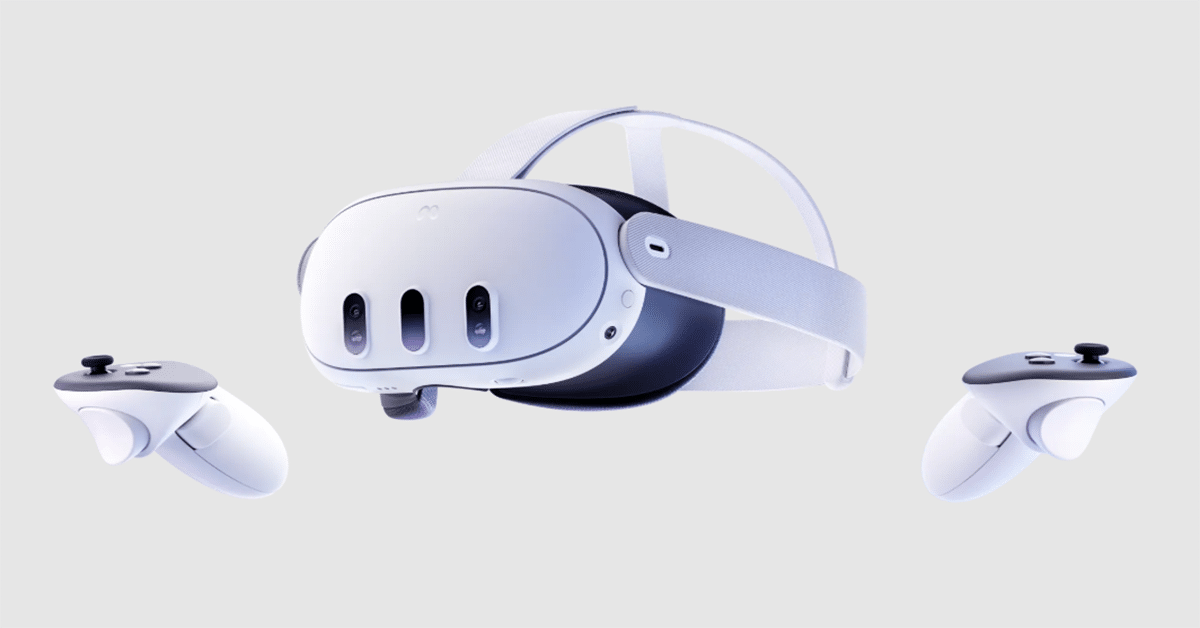
Meta
Meta Quest 3
$599.99Cheaper
Released 2023-10
Best VR Headsets · head-to-head
A sourced, side-by-side comparison. Meta Quest 3 is cheaper at $599.99. Every spec and price links to its source.
Meta
$599.99Cheaper
Released 2023-10
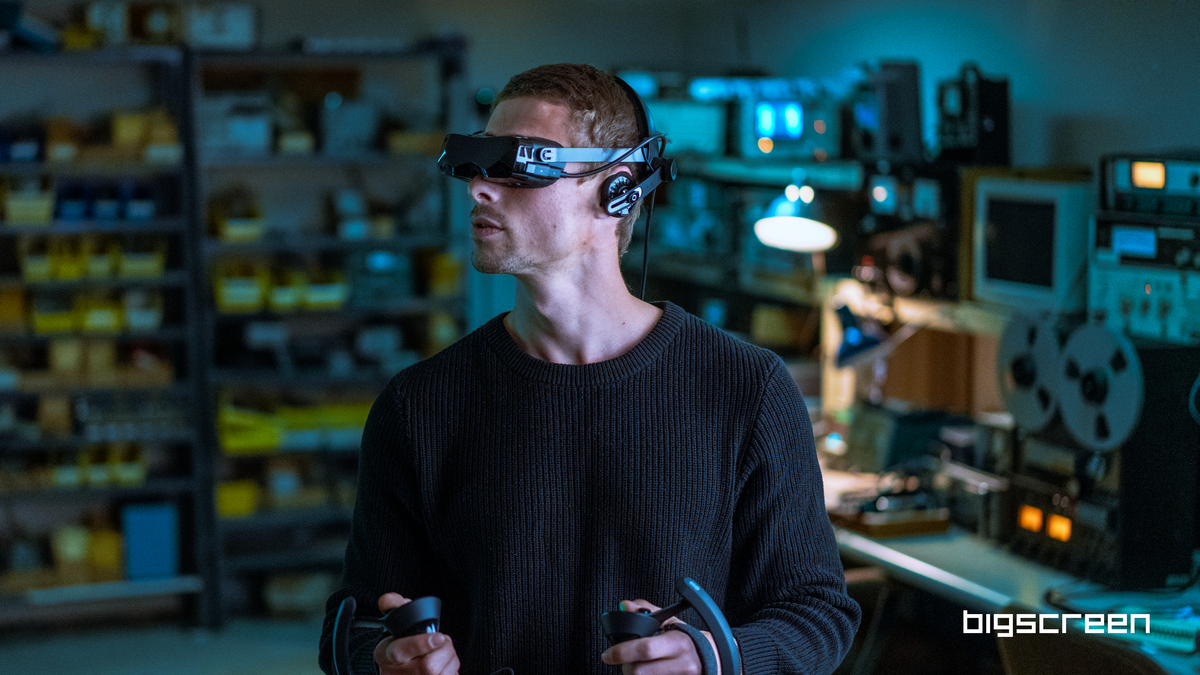
Bigscreen
$999
Released 2023-01
They split the 2 specs we compare evenly. The Meta Quest 3 is the cheaper at $599.99.
As an Amazon Associate we earn from qualifying purchases. Prices verified at capture; live price may differ.
The numbers that decide it, drawn to scale — longer bar wins, the accent bar is the stronger figure.
✓ marks the stronger figure where "more" — or "less", for price and weight — is unambiguously better.
| Spec | Meta Quest 3 | Bigscreen Beyond |
|---|---|---|
| US price | $599.99 | $999 |
| Brand | Meta | Bigscreen |
| Released | 2023-10 | 2023-01 |
| Display per eye | 2064x2208 | 2560x2560 |
| Refresh (Hz) | 120 | 90 |
| FOV (°) | 110 | — |
| Tracking | inside-out optical (no base stations) | SteamVR Lighthouse outside-in (base stations required) |
| Standalone | Yes | No |
| Storage (GB) | 128 | — |
| Weight (g) | 515 | 127 |
| Passthrough | Yes | No |
| Release | 2023-10 | 2023-01 |
Sources — Meta Quest 3: en.wikipedia.org (verified 2026-06-15). Bigscreen Beyond: en.wikipedia.org (verified 2026-06-15).
Where the two actually differ on the specs we track (6 of 8). Matching specs are omitted.
Sourced tester consensus for each — the "what people who used it think" layer, not just specs.
Across three verified hands-on reviews (Tom's Guide, TechRadar, The Verge), the Quest 3 is the consensus best standalone VR headset for the price / for most people: sharper higher-res pancake-optic displays that finally make in-headset text legible, a slimmer better-balanced design, snappy Snapdragon XR2 Gen 2 performance, and improved full-color passthrough over predecessors. Tom's Guide and The Verge flag roughly two-hour battery life and imprecise hand tracking, and both note a thin mixed-reality content library at launch; TechRadar reports the same ~2-hour runtime but frames it positively and is bullish on MR. (3 sourced reviews, 3 lab-tested.)
Praised: Best standalone VR headset for the price / for most people; Sharper higher-res pancake-optic displays; in-headset text finally legible; Slimmer, better-balanced, more comfortable design than Quest 2.
Flagged: Short battery life, around two hours; Hand tracking imprecise / not yet genuinely useful; Thin mixed-reality content library at launch.
Two whitelisted VR outlets (Road to VR, UploadVR) published hands-on reviews of the original Bigscreen Beyond in September 2023, both explicitly as review-in-progress pending the forthcoming audio strap. Both agree it is exceptionally light and comfortable for long sessions, and both flag an unusually tight eyebox where the slightest misalignment ruins clarity and field-of-view, plus lens glare and edge distortion. Road to VR additionally praises the sharp OLED image (true blacks, no screen-door) and hammers the lack of built-in audio at launch; UploadVR is more reserved on visual quality. (2 sourced reviews, 2 lab-tested.)
Praised: Exceptionally light and comfortable for long sessions vs heavier headsets; Sharp microOLED visuals with true blacks and no screen-door effect.
Flagged: Extremely tight eyebox/sweet spot; tiny misalignment ruins clarity and FOV; Lens glare and edge distortion/internal reflections in high-contrast scenes; No built-in audio at launch (audio strap still forthcoming).